Introduction: Why the Flag Alphabet Matters for Boaters
Picture yourself gliding across the shimmering waters off the Australian coast, the sun high overhead, and the horizon stretching endlessly before you. Whether you’re aboard a sleek yacht or a sturdy fishing boat from RunBoats, one truth remains: communication is the lifeline of every boating adventure. While modern technology like VHF radios and GPS has transformed how we navigate, there’s a timeless method that continues to hold its own—the flag alphabet, officially known as the International Maritime Signal Flags.
This system of colorful flags, each representing a letter from A to Z or a number from 0 to 9, offers a visual language that’s as practical as it is steeped in tradition. From signaling distress to coordinating with nearby vessels or simply adding a splash of nautical flair, the flag alphabet is a skill every boater should embrace. At RunBoats, we’re passionate about empowering you with the knowledge and tools to make every trip unforgettable. In this extensive guide, we’ll explore the history, mechanics, and real-world uses of the flag alphabet, complete with a detailed HTML chart you can paste into your webpage. Let’s hoist the flags and dive into this maritime masterpiece!
The Rich History of the Flag Alphabet
The flag alphabet’s origins trace back to the golden age of sail, when ships roamed the seas with no radios or satellites to bridge the gap between them. In those days, visual signals were the only way to communicate across miles of water. Early mariners used a patchwork of flag systems, often unique to their nation or fleet, which led to confusion in international waters. By the mid-19th century, the need for a unified code became undeniable, sparking the creation of what we now call the International Code of Signals (ICS).
In 1857, the British Board of Trade published the first edition of the ICS, introducing a standardized set of flags that could spell out messages or convey specific meanings when flown solo. The system was a game-changer, adopted by navies and merchant fleets worldwide. Over the decades, it evolved with input from maritime powers like the United States, France, and others, refining the designs for maximum visibility. Each flag’s bold colors—reds, blues, yellows, and whites—and geometric patterns—stripes, crosses, and triangles—were crafted to stand out against the sea and sky, readable even through fog or at dusk with a telescope.
The flag alphabet played a starring role in maritime history. During World War I, Allied fleets used it to coordinate battleship formations, while merchant ships signaled for coal or reported storms. In World War II, it guided convoys through U-boat-infested waters. Even after radio communication emerged, flags remained a vital backup, enshrined in the International Convention for the Safety of Life at Sea (SOLAS). For modern boaters with, learning this system isn’t just practical—it’s a way to connect with the seafaring pioneers who shaped our passion for the water.
Understanding the Flag Alphabet: How It Works
The flag alphabet is a marvel of simplicity and versatility. It comprises 26 alphabetical flags (A to Z), 10 numeral pennants (0 to 9), and a handful of special-purpose flags like substitutes and answering pennants. Each flag boasts a unique design—think red swallowtails, blue-and-white checkers, or yellow diagonals—making them instantly recognizable. Beyond spelling out words letter by letter, many flags carry standalone meanings, doubling their utility.
Take the “A” flag: a white square with a red vertical stripe. In a sequence, it’s the letter “A,” but flown alone, it warns, “I have a diver down; keep clear.” The “V” flag, white with a red X, spells “V” or signals “I require assistance.” This dual-purpose design makes the system efficient—hoist one flag for an urgent message or string several together for a detailed note.
To use the flag alphabet, you hoist flags on a halyard, mast, or rigging, typically from top to bottom or left to right, depending on your boat’s layout. A single flag delivers its predefined meaning, while multiple flags spell out words. For example, “N” (blue and white checkers) and “C” (blue, white, red stripes) together mean “I am in distress”—a powerful signal in a pinch. The system’s elegance lies in its low-tech reliability: no power, no frequencies, just a set of flags and a clear view.
The Flag Alphabet Chart in HTML
| Letter | Flag Image | Meaning |
|---|---|---|
| A |  | I have a diver down; keep clear |
| B |  | I am carrying dangerous goods |
| C |  | Yes (affirmative) |
| D | 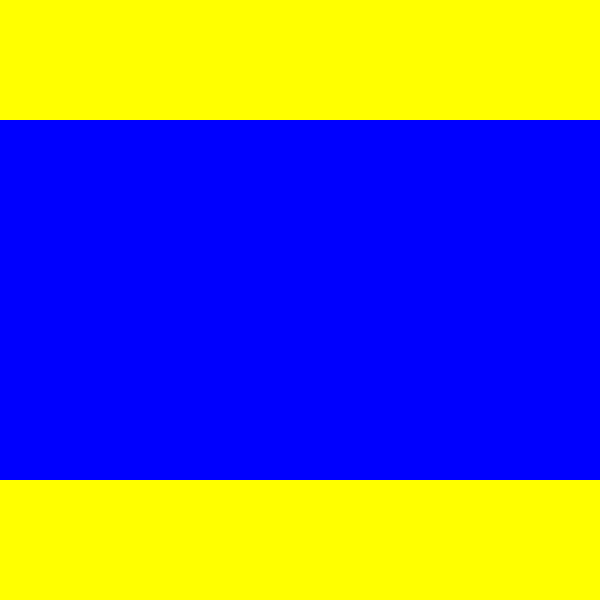 | Keep clear of me |
| E |  | I am altering course to starboard |
| F |  | I am disabled |
| G |  | I require a pilot |
| H |  | I have a pilot on board |
| I |  | I am altering course to port |
| J |  | I am on fire |
| K | 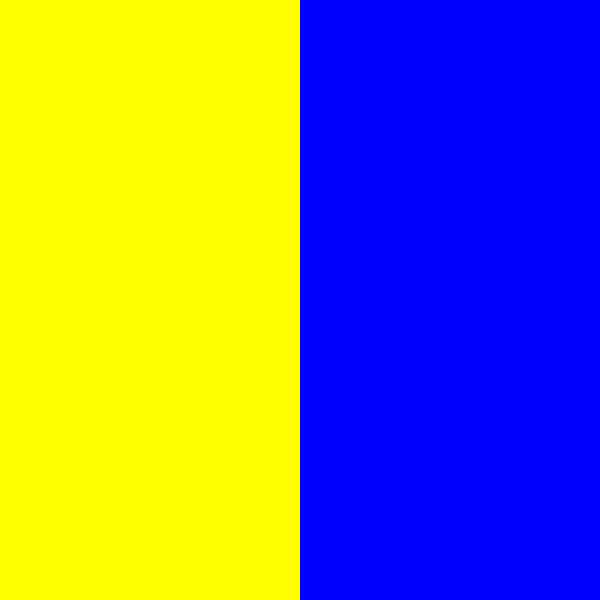 | I wish to communicate |
| L |  | Stop your vessel |
| M |  | My vessel is stopped |
| N | 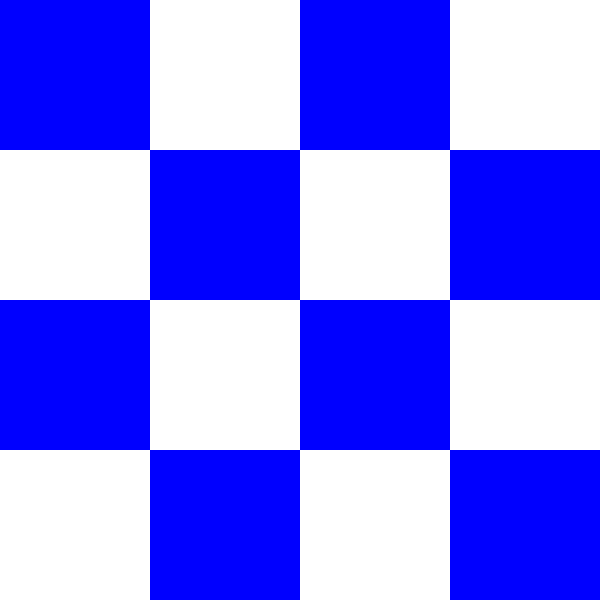 | No (negative) |
| O |  | Man overboard |
| P |  | About to depart (port signal) |
| Q |  | Request health clearance |
| R |  | No specific meaning |
| S |  | My engines are going astern |
| T |  | Keep clear (fishing vessels) |
| U |  | You are running into danger |
| V |  | I require assistance |
| W | 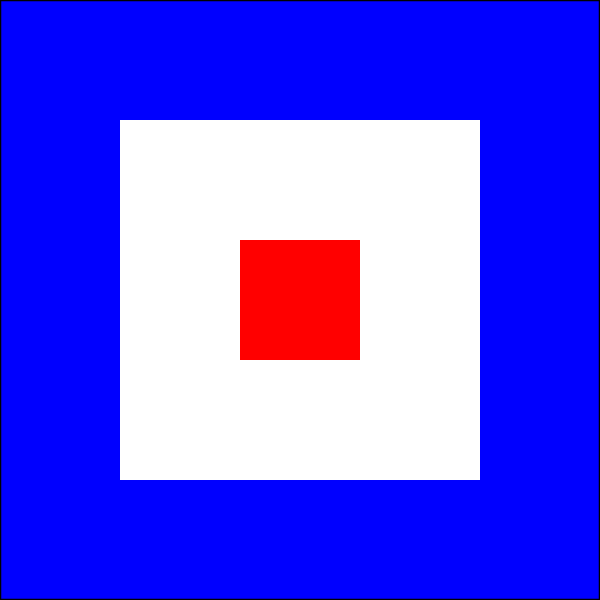 | I require medical assistance |
| X |  | Stop your intentions |
| Y |  | I am dragging my anchor |
| Z |  | I require a tug |
| Number | Flag Image | Flag Description |
|---|---|---|
| 0 |  |
Zero: Answer or Affirmative. Used to indicate “Yes” or “That is correct.” |
| 1 |  |
One: I am maneuvering with difficulty. Indicates that a vessel is having trouble maneuvering. |
| 2 |  |
Two: I require assistance. Signifies that a vessel needs help. |
| 3 |  |
Three: I am operating astern. Shows that a vessel is moving backwards. |
| 4 | 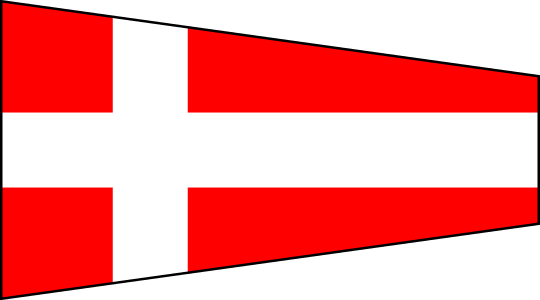 |
Four: I am disabled; communicate with me. Indicates a vessel is disabled and needs communication. |
| 5 |  |
Five: I am carrying out speed trials. Shows that a vessel is conducting speed tests. |
| 6 |  |
Six: I wish to communicate with you. Signifies a desire to communicate with another vessel. |
| 7 |  |
Seven: I require a doctor. Indicates that a vessel needs medical assistance. |
| 8 |  |
Eight: I have a man overboard. Signifies that a person has fallen overboard. |
| 9 | 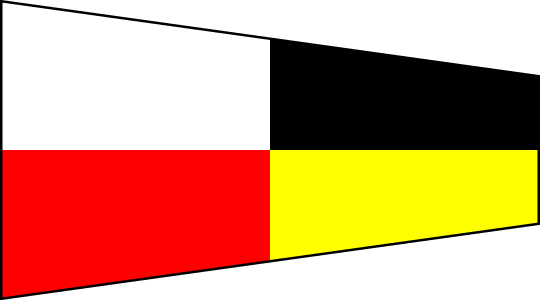 |
Nine: I am aground. Shows that a vessel is stuck on the seabed. |
Key Notes:
- Spell words by hoisting multiple flags in sequence (top to bottom or left to right).
- Fly a single flag for its standalone meaning.
- Use substitute flags (not listed) to repeat letters in a word.
Attribution: Flag images are sourced from Wikimedia Commons under the Creative Commons CC BY-SA 3.0 license.
Practical Applications of the Flag Alphabet in Boating
The flag alphabet isn’t just a relic—it’s a living tool with countless uses for today’s boaters. Here’s how it can elevate your experience:
- Emergency Signaling: When electronics fail, flags step in. Hoist “V” to signal “I require assistance” or “N” + “C” for “I am in distress.” Picture your boat adrift after a storm—you raise “V,” and a nearby vessel spots it, rushing to your aid.
- Navigation Coordination: In crowded waters, flags like “E” (altering course to starboard) or “I” (to port) clarify your movements, preventing collisions. It’s a silent, clear way to say, “I’m turning—watch out!”
- Port and Customs: Arriving at a new harbor? Fly “Q” to request health clearance or “P” to announce your departure. These signals streamline interactions with port authorities.
- Safety for Divers and Fishers: The “A” flag warns other boats of divers below, while “T” keeps fishing vessels clear of your nets or lines—a lifesaver in busy areas.
- Recreational Fun: Hosting a boating party? Spell out “WELCOME” or “HAPPY BIRTHDAY” with flags for a festive vibe. It’s a hit at regattas or family outings.
Consider this: You’re on a fishing trip when your engine sputters out. You hoist “F” (I am disabled), and a passing yacht tows you to shore—no radio needed. That’s the flag alphabet’s power in action.
How to Use the Flag Alphabet: A Step-by-Step Guide
Ready to put the flag alphabet to work? Here’s a detailed guide to get you started:
- Gather Your Gear: Invest in a full set of signal flags — 26 letter flags, 10 numeral pennants, and a few substitutes. Opt for durable, weather-resistant materials in bright colors for maximum visibility.
- Learn Key Signals: Start with essentials like “V” (assistance), “O” (man overboard), and “N” + “C” (distress). Memorize their designs and meanings using the chart above.
- Practice Spelling: Hoist flags to spell simple words like “HELP” (H-E-L-P) or “SOS” (though Morse is more common for this). On a calm day, try “RUN BOATS” (R-U-N B-O-A-T-S) to get the hang of it.
- Set Up Your Boat: Ensure your vessel has a halyard, mast, or rigging to display flags. Vertical hoisting is standard, but horizontal works if visibility demands it.
- Signal with Precision: Face your target (another boat or shore), raise each flag steadily, and lower them briefly between words to separate messages. Hold positions long enough to be seen—about 5-10 seconds per flag.
For practice, imagine signaling “NEED FUEL” to a marina. You’d hoist N-E-E-D, pause, then F-U-E-L. With time, you’ll signal as smoothly as a seasoned captain.
The Flag Alphabet vs. Modern Technology
In a world of satellite phones and digital navigation, why bother with flags? The flag alphabet holds its own with distinct advantages:
- No Power Dependency: Radios die, batteries fail, but flags work as long as you have daylight and a breeze. They’re the ultimate low-tech solution.
- Long-Range Visibility: Bold designs cut through haze or glare, readable from miles away with binoculars—farther than many radio signals in rough conditions.
- Global Recognition: Mariners from Sydney to San Diego understand the ICS, making it a universal language that transcends tech barriers.
- Reliable Backup: When storms knock out your electronics, flags remain a lifeline, as countless sailors have proven over the years.
That said, modern tech has its edge. Radios transmit complex messages instantly, and GPS pinpoints your location with precision—flags can’t compete there. The savvy boater blends both: use tech for routine tasks and flags for emergencies or visual impact.
Real-Life Stories: The Flag Alphabet in Action
The flag alphabet’s legacy is written in tales of survival, coordination, and celebration:
- The Titanic Aftermath: While the Titanic famously used Morse code, rescue ships like the Carpathia relied on signal flags to locate lifeboats in the chaos, guiding survivors to safety.
- Modern Rescue: In 2020, a New Zealand yacht lost power off the Great Barrier Reef. The crew hoisted “V,” and a fishing boat spotted it, towing them to port—a modern echo of the flag’s lifesaving role.
- Racing Glory: During the Sydney to Hobart Yacht Race, competitors fly “C” (yes) or “N” (no) to confirm their status at checkpoints, blending tradition with high-stakes competition.
- Everyday Heroics: There was a story of a man who once shared how they used “O” (man overboard) to alert a nearby vessel after a crew member fell — quick action saved the day.
These stories underscore why the flag alphabet remains a vital skill — it’s not just history; it’s a tool for today.
Teaching the Flag Alphabet: Tips for Boaters
Learning the flag alphabet is a journey worth taking. Here’s how to make it stick:
- Start with Essentials: Focus on emergency flags first — “V,” “O,” “N” + “C” — before tackling the full alphabet. They’re the most likely to save you in a pinch.
- Use Mnemonics: Pair “A” with “Alpha Diver,” “B” with “Bravo Danger,” or “V” with “Victor Assistance” to lock in meanings.
- Practice Hands-On: On your next outing, hoist flags with your crew and decode messages together. Start with “HI” (H-I) and build to “NEED HELP” (N-E-E-D H-E-L-P).
- Leverage Resources: Print the chart above, grab a signal flag handbook, or download apps that quiz you on designs and meanings.
- Join the Community: Attend boating events or regattas where flags are flown — real-world exposure beats book learning every time.
Kids love it too — teach them “FUN” (F-U-N) and watch them beam as they signal from the bow. It’s a family-friendly way to bond over boating.
Enhancing Your Boat with Flags
The flag alphabet isn’t just functional—it’s a way to personalize your vessel:
- Dress Ship: For holidays or celebrations, string flags A-Z in a colorful arc across your boat. It’s a stunning sight at anchor or during a parade.
- Club Pride: Pair signal flags with your yacht club’s burgee or a custom pennant for a signature look.
- Safety Signals: Keep “A” (diver down) or “V” (assistance) stowed but accessible — ready for instant use.
- Racing Flair: In competitions, fly “C” or “N” to answer race officials, adding a professional touch to your run.
A customer once told us they dressed their vessel in flags for a wedding proposal—spelling “MARRY ME” across the deck. She said yes, and the flags made it unforgettable.
The Flag Alphabet in Different Conditions
Weather and visibility affect how you use flags:
- Clear Days: Ideal for long-distance signaling—bright colors pop against blue skies, readable up to 5 miles with binoculars.
- Fog or Rain: Visibility drops, so hoist flags higher and use bold designs like “V” or “O” for clarity. Pair with sound signals if needed.
- Night: Flags are less effective, but reflective or illuminated versions can work with a spotlight.
Adapt your approach—daylight is your friend, but preparation keeps you versatile.
Integrating Flags with Other Signaling Methods
The flag alphabet shines brightest when paired with other systems:
- Morse Code: Flash “SOS” with a light at night, then hoist “N” + “C” by day for a double distress call.
- Semaphore: Use flags for static messages and semaphore for dynamic ones—both are visual and complementary.
- Radio: Confirm radio chats with a “C” (yes) or “N” (no) flag to ensure understanding in noisy conditions.
With RunBoats, you can master this trio—flags, Morse, and semaphore—for unbeatable communication.
Common Mistakes and How to Avoid Them
Newbies often stumble—here’s how to stay sharp:
- Wrong Order: Hoist flags top-down or left-right consistently. Practice avoids confusion.
- Poor Visibility: Raise flags high and clear of sails or rigging—obstructions hide your message.
- Forgetting Meanings: Review the chart regularly; mix-ups like “V” (assistance) for “W” (medical) can mislead.
- Faded Flags: Replace worn flags — dull colors lose impact.
A quick drill before each trip keeps your skills crisp.
Conclusion: Hoist Your Flags with Confidence
The flag alphabet is more than a communication tool—it’s a bridge to maritime history, a safety net, and a source of pride for boaters. From spelling “HELP” in a storm to dressing your boat for a celebration, it’s a skill that enriches every voyage. With this guide and the HTML chart, you’re ready to signal like a pro. The water’s calling—answer it with style!