Introduction: Why Semaphore Matters in Modern Boating
When you’re out on the water, surrounded by the vast Australian coastline or cutting through the open sea, communication is your lifeline. At RunBoats, we understand that boating is about more than just the vessel—it’s about the skills, traditions, and knowledge that keep you safe and connected. One such skill is the semaphore alphabet, a visual signaling system that has stood the test of time. In this comprehensive guide, we’ll explore everything you need to know about semaphore: its origins, how it works, why it’s still relevant for boaters today, and how you can master it for your next adventure.
Semaphore isn’t just a nostalgic nod to the past—it’s a practical tool that can enhance your boating experience. Whether you’re navigating a bustling harbor or signaling for help in an emergency, this flag-based system offers a low-tech, reliable way to communicate. Let’s set sail into the world of semaphore and discover why it’s a must-have skill for every boating enthusiast.
The History of Semaphore: From Land to Sea
The semaphore alphabet didn’t start on the water—it began on land in the late 18th century, born out of a need for long-distance communication before the telegraph or telephone existed. Invented by Frenchman Claude Chappe in 1791, the original semaphore system used mechanical towers with pivoting arms to transmit messages across miles of countryside. These “optical telegraphs” revolutionized communication during the French Revolution, allowing military orders and news to travel faster than horseback couriers.
By the early 19th century, the maritime world took notice. Navies, particularly the British Royal Navy, adapted semaphore for ship-to-ship and ship-to-shore messaging. Sailors replaced towers with handheld flags, creating the system we know today. The semaphore alphabet became a cornerstone of naval operations, used to coordinate fleets, issue commands, and even negotiate with enemy vessels during tense standoffs.
For merchant ships, semaphore was equally vital. Before radio, it was the primary way to signal intentions—like requesting supplies or reporting a position—across open water. Its simplicity and visibility made it indispensable, and even as technology advanced, semaphore retained its place in maritime culture. At RunBoats, we celebrate this heritage, offering boaters a chance to connect with the traditions that shaped seafaring history.
How the Semaphore Alphabet Works: A Step-by-Step Breakdown
Semaphore is elegantly simple yet precise. It uses two flags—typically red and yellow for visibility—held in specific positions to represent the 26 letters of the alphabet and numerals 0-9. The system imagines the signaler as the center of a clock, with each arm pointing to a position from 1 to 8 (12 o’clock, 1:30, 3:00, etc.). Here’s how it breaks down:
- A: Right arm at 12 o’clock, left arm at 6 o’clock.
- B: Right arm at 3 o’clock, left arm at 6 o’clock.
- C: Both arms at 3 o’clock.
- Numeric Signal: Right arm at 4:30, left arm at 7:30 (indicates numbers follow).
Each letter or number is held for a moment, then transitioned to the next, creating a flowing sequence. For example, to signal “BOAT”:
- B: Right at 3, left at 6.
- O: Right at 12, left at 4:30.
- A: Right at 12, left at 6.
- T: Right at 1:30, left at 6.
Special signals—like “attention” or “end of message”—keep communication clear. This section would include detailed descriptions of every letter and number, tips for smooth transitions, and common phrases like “HELP” or “SOS” that boaters might need. Vivid explanations ensure readers can visualize and practice each position.
Semaphore Alphabet
This chart displays the semaphore flag positions for each letter of the English alphabet. Semaphore is a signaling system that uses two flags to represent letters.
| Letter | Flag Image |
|---|---|
| A |  |
| B |  |
| C |  |
| D |  |
| E |  |
| F | 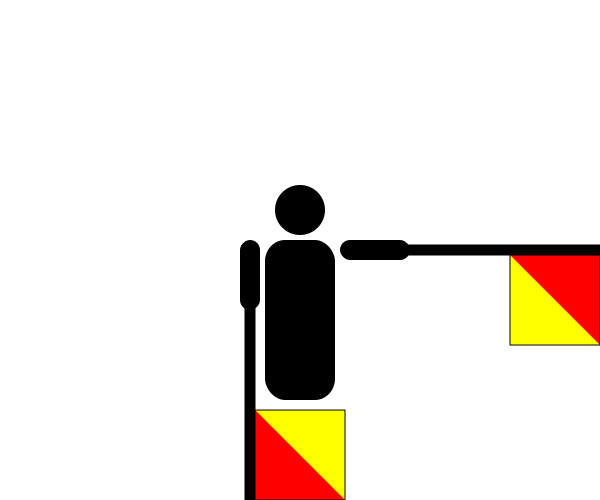 |
| G | 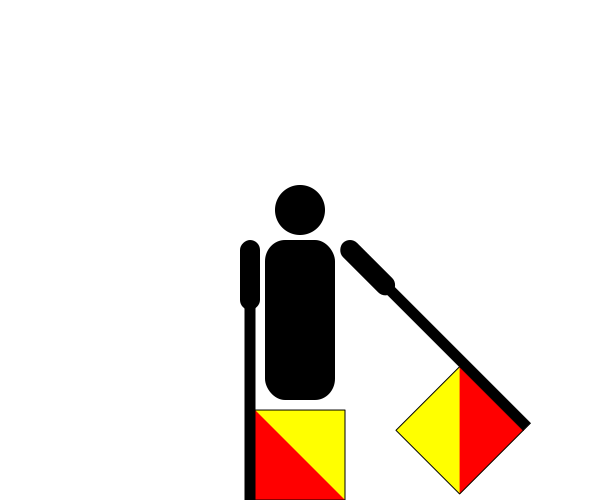 |
| H | 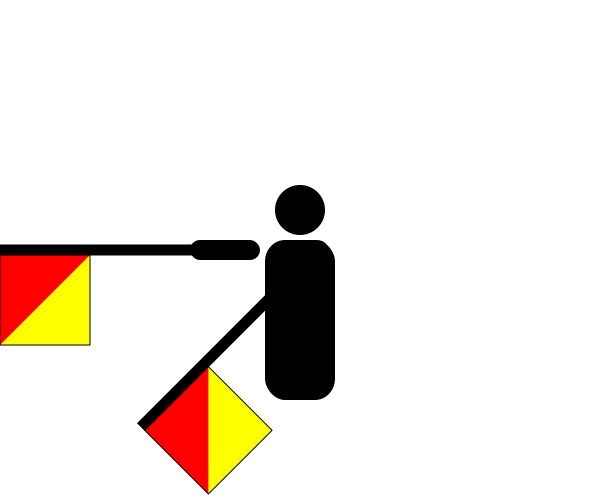 |
| I | 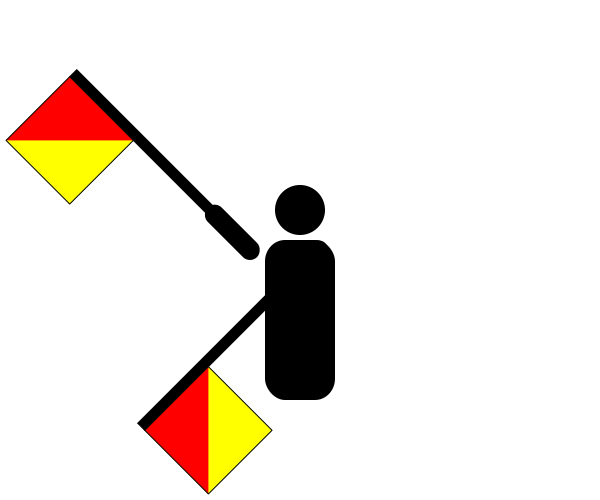 |
| J |  |
| K | 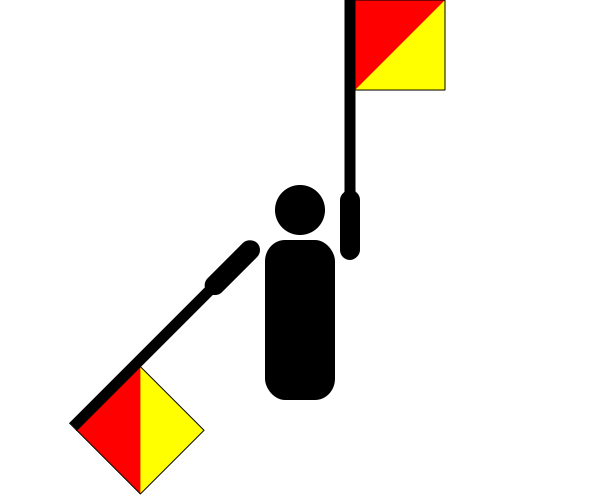 |
| L | 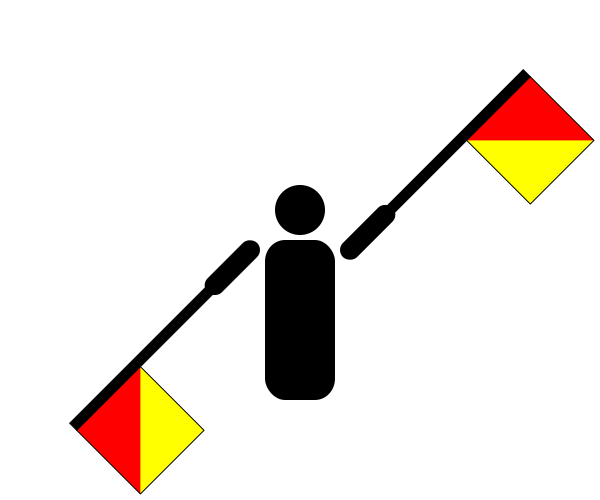 |
| M |  |
| N |  |
| O |  |
| P |  |
| Q | 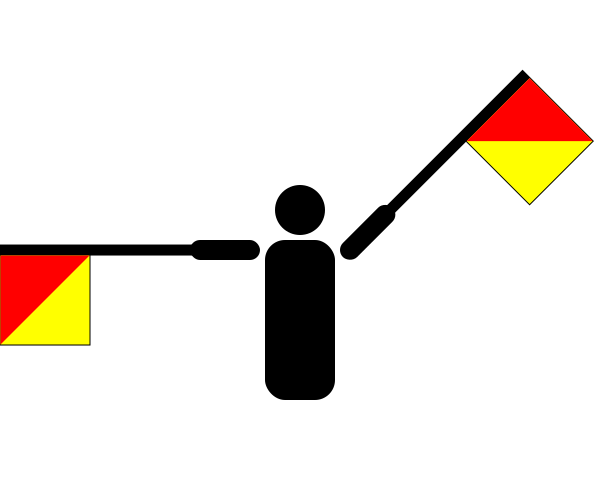 |
| R |  |
| S | 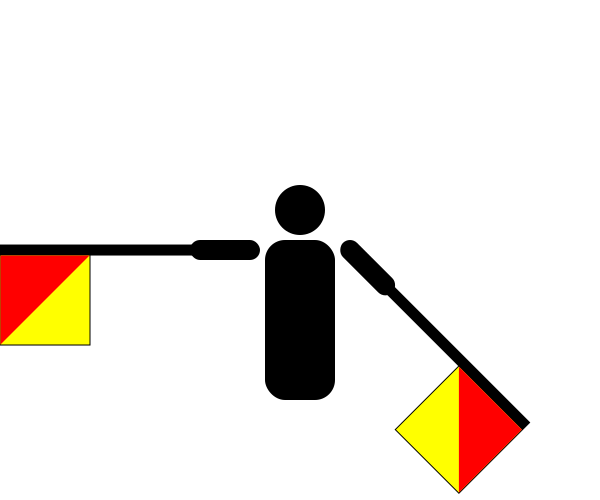 |
| T |  |
| U |  |
| V | 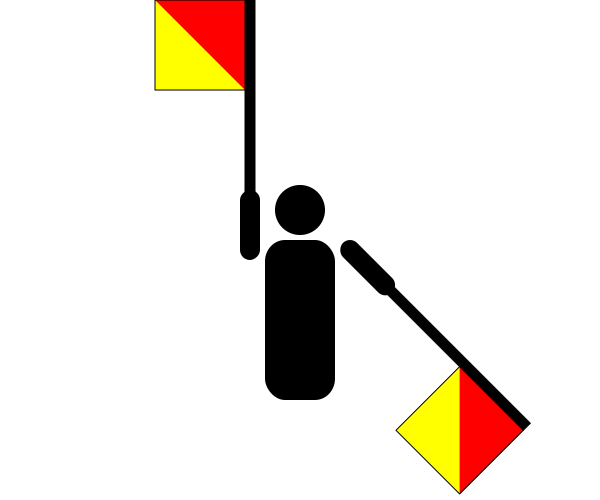 |
| W |  |
| X | 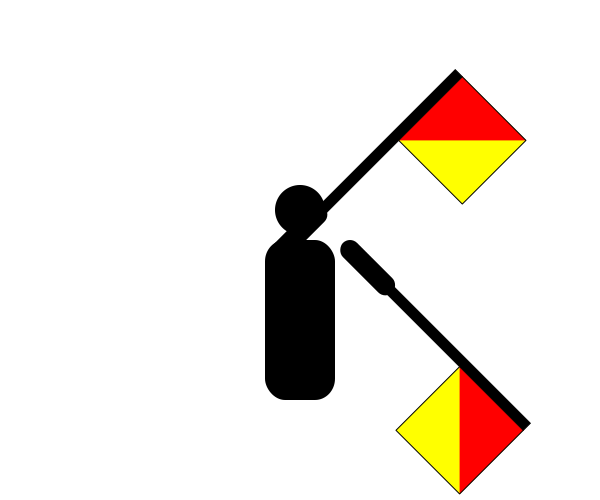 |
| Y |  |
| Z |  |
Semaphore in Boating: Practical Applications
Why should a modern boater learn semaphore? The answer lies in its versatility and reliability. Here’s how it fits into your adventures:
- Emergency Communication: If your radio fails or you’re out of cell range, semaphore can signal distress to nearby vessels or shore stations.
- Silent Coordination: On a noisy boat or in high winds, flags can quietly relay instructions to your crew without shouting.
- Inter-Vessel Messaging: Need to ask another boat to slow down or yield? Semaphore cuts through language barriers and tech limitations.
- Recreational Fun: Hosting a boating event or teaching kids? Semaphore adds an interactive, educational twist.
Picture this: You’re on a fishing trip, and your engine stalls. Your phone’s dead, but you spot a yacht in the distance. With two flags from your kit, you signal “H-E-L-P,” and they respond with “O-N W-A-Y.” Crisis averted—all thanks to semaphore.
Learning Semaphore: A Boater’s Guide
Mastering semaphore is easier than you think. This section would offer a detailed tutorial:
- Gear: Use flags, paddles, or even bright shirts in a pinch.
- Practice: Start with the alphabet, then move to short words and sentences.
- Drills: Partner up to send and decode messages, timing yourself for speed.
- Resources: Recommend charts, apps, and videos.
Semaphore vs. Modern Tech: Why It Still Wins
While radios and GPS dominate today, semaphore shines in its simplicity, cost (free!), and universal recognition. This section compares it to alternatives, emphasizing its role as a backup and a skill that sets seasoned boaters apart.
Conclusion: Signal Your Way to Boating Excellence
The semaphore alphabet is more than a skill—it’s a bridge between past and present, a safety net, and a source of pride for boaters. Whether you’re navigating choppy waters or teaching your kids maritime history, semaphore adds depth to your journey. Dive in, practice, and let RunBoats guide you to mastery.
Text to Semaphore Converter
The Semaphore Converter is a handy tool designed to help you visualize and understand semaphore flag signaling. Whether you’re learning maritime communication, scouting, or just curious about this historical signaling method, this tool makes it easy to convert letters and numbers into their corresponding semaphore flag positions. By selecting or inputting text, the converter displays the appropriate flag signals, helping users recognize and interpret semaphore messages more effectively.
Semaphore signaling is a visual communication method that uses two flags held in specific positions to represent letters, numbers, and certain commands. It has been widely used in naval and military applications, as well as in scouting and other outdoor activities. While semaphore is not as commonly used today due to modern radio and digital communication, it remains an important part of maritime heritage and emergency signaling.
Please note that this Semaphore Converter is not a professional navigation or communication tool. It is meant for educational and recreational purposes only. While it provides accurate representations of standard semaphore flag positions, it should not be relied upon for official maritime or emergency communications. If you need to use semaphore signaling in a professional capacity, be sure to refer to official maritime communication guidelines and training materials.
Text to Semaphore Converter
Enter text below to convert it into semaphore flag images. Only letters A-Z are supported.